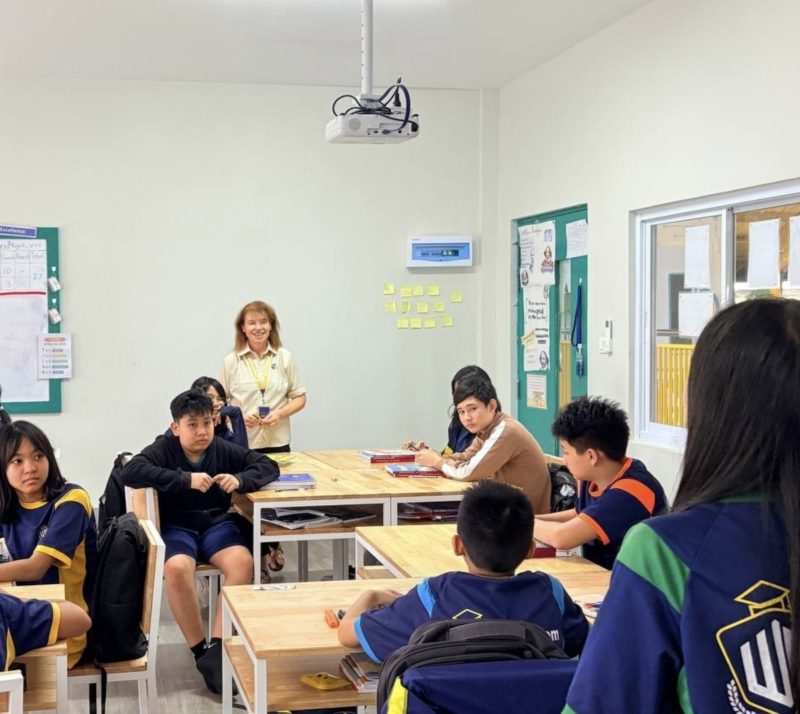
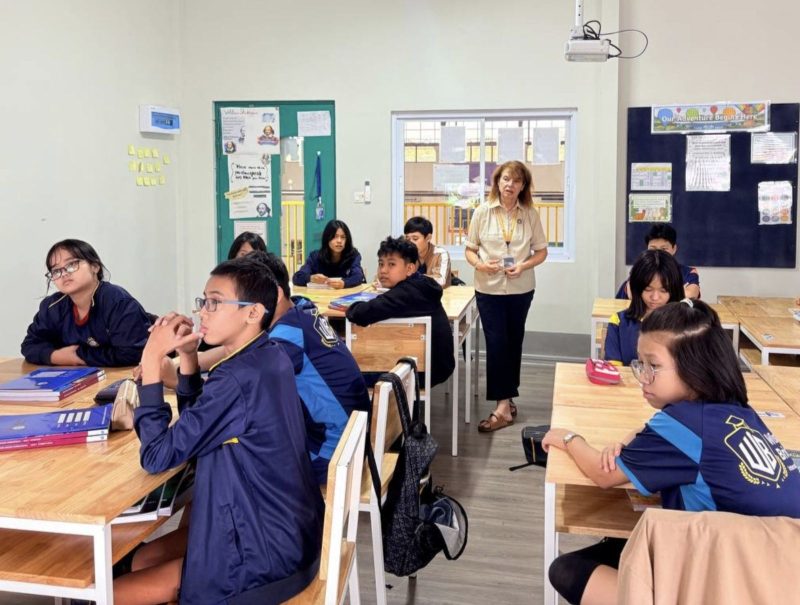
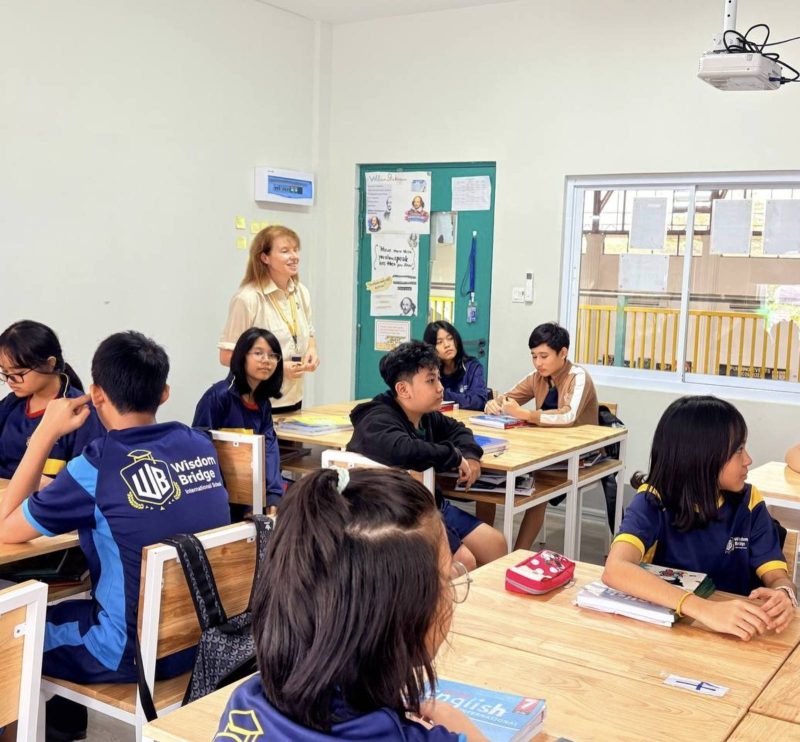
Wisdom Bridge International School Key-Stage 3
ILower Secondary Curriculum Overview: Inspire English, Maths Progress, Inspire Science and Inspiring Computing syllabi
Pearson iLower Secondary Inspire English International
Overall Aim: To provide a comprehensive whole-school English program that aligns with both the English National Curriculum and the Pearson iLower Secondary Curriculum, fostering confident, articulate, and critically thinking English language users. It is specifically designed with English as an Additional Language (EAL) learners in mind to help them achieve first-language outcomes.
Key Features:
- Theme-based approach: Units are centered around relevant, age-appropriate themes (e.g., identity, technology) to spark curiosity and encourage meaningful discussion.
- Diverse Texts and Authors: Features a range of texts and authors from different cultures to ensure global relevance and inclusivity.
- Skills Mastery: Strong focus on developing key English skills:
- Reading: Comprehension, critical response, analysis of text structure and language use, understanding writer’s intent and viewpoint, comparing texts.
- Writing: Communicating appropriately for form, audience, and purpose; organizing and structuring writing; accurate grammar, punctuation, and spelling.
- Speaking and Listening: Woven throughout objectives, supporting discussion techniques, presentations, and debates.
- 21st-Century Skills: Integrates critical thinking, creativity, collaboration, and communication into learning activities.
- Spiral Approach: Topics are revisited each year with increasing depth and complexity, ensuring thorough preparation for future studies.
- Progression: Provides a clear and logical pathway to International GCSE English (both First and Second Language options).
- Resources: Includes student books, workbooks, and detailed teacher guides with lesson plans, extension ideas, and assessment resources.
- Assessment: Built-in assessment opportunities and progress tracking tools.
Curriculum Strands (Examples – generally apply across Years 7-9 with increasing complexity):
- Reading:
- Reading for Meaning (literal and implicit understanding)
- Responding to Texts (critical response, evidence)
- Text Structure (organization, writer’s choices)
- Language Use (grammatical and literary language)
- Writing:
- Purpose and Audience
- Organization and Structure
- Grammar, Punctuation, and Spelling
Pearson iLower Secondary Maths Progress International
Overall Aim: To build confidence and fluency in mathematics, developing problem-solving and mathematical reasoning skills, and providing a seamless progression to Pearson Edexcel International GCSE Mathematics (9-1). It’s designed for international students, with attention to EAL learners.
Key Features:
- Mastery Approach: Based on evidence-based principles to develop deep conceptual understanding and mathematical reasoning.
- Seamless Progression: Explicitly designed to lead into International GCSE Mathematics (9-1).
- Spiral Curriculum: Key mathematical skills and concepts are revisited and deepened each year.
- Fluency, Reasoning, and Problem-Solving: Develops these core mathematical proficiencies.
- International Relevance: Designed with appropriate cultural sensitivities and international contexts.
- Support for EAL Learners: Accessible wording ensures language is not a barrier to learning mathematics.
- Resources: Includes student books, workbooks, and online digital resources for planning, teaching, tracking progress, and assessment (often linked to ActiveLearn Secondary).
- Assessment: Includes unit progress tests and end-of-year progress tests.
Curriculum Strands (Examples – generally apply across Years 7-9 with increasing complexity)
- Number:
- IntegersFractions and Decimals Percentages Calculation Skills Ratio and Proportion
- Algebra:
- Expressions and Formulae
- Sequences
- Graphs
- Equations (from Year 8)
- Geometry and Measure:
- MeasureAnglesPolygonsSymmetryTransformationsConstructions (introduced in Year 9)Congruence and Similarity (introduced in Year 9)
- Statistics:
- Data
- Charts and Diagrams
Pearson iLower Secondary Inspire Computing International
Overall Aim: To equip students with future-ready digital skills, understanding fundamental principles of computer science and information technology, and becoming responsible, confident, and creative users of ICT. It is aligned with the British Curriculum (iPrimary and iLowerSecondary) and the English National Curriculum.
Key Features:
- Beyond ICT: Introduces key computing concepts like computational thinking, programming, data representation, and digital citizenship, moving beyond just using technology to understanding how it works and how to create with it.
- Computational Thinking: Emphasizes logic, abstraction, algorithms, and pattern recognition, fostering a mindset of creation over consumption.
- Industry-Relevant Content: Developed in collaboration with education and industry experts to reflect current technologies and future trends.
- Age-Appropriate Progression: Structured progressively across Years 7-9 with student books and workbooks for each year.
- Practical Application: Encourages hands-on tasks, from writing simple code to analyzing data.
- Strong Foundation: Prepares students for further studies like UK GCSE or International GCSE in Computing.
- Resources: Student books, workbooks, and detailed teacher guides with structured lesson plans and assessment resources.
- Assessment: Includes internal progress tests and an external Year 9 Achievement Test.
Curriculum Strands (Examples – generally apply across Years 7-9 with increasing complexity):
- Problem Solving: Algorithms and Abstraction:
- Coding algorithms (visual and textual languages like Python)
- Comparing algorithm utility
- Designing and using computational abstractions
- Decomposition
- Programming and Development:
- Writing and interpreting programs
- Understanding variables, sequence, selection, and repetition
- Debugging
- Data and Representation:
- Binary representation of numbers, characters, sound, and images
- Understanding data capacity
- Information Technology – Application of IT:
- Hardware components (CPU, memory, storage, I/O)
- Software categories (application, utility)
- Networks and communication (LANs, WANs, Wi-Fi, mobile networks, packets)
- Safe and responsible practice (cybersecurity, digital footprint, privacy)
- Software Skills – Web Authoring (and other applications):
- Word processing, spreadsheets, database management, presentations, graphics, web authoring, file handling.
Pearson iLowerSecondary Inspire Science International (Exploring Science International)
Overall Aim: To foster a lifelong curiosity and passion for science in students aged 11-14 (Years 7-9). This curriculum is designed to provide a deep understanding of scientific concepts, develop strong scientific enquiry skills, and ensure a seamless progression to Pearson Edexcel International GCSE Sciences. It uses real-world science to engage students and is designed with the international learner, including EAL students, in mind.
Key Features:
- Enquiry-Led Learning: Strong emphasis on developing scientific enquiry skills through practical activities, investigations, and critical thinking. It encourages students to ask questions, test hypotheses, analyze results, and draw conclusions.
- Comprehensive Coverage: Provides thorough coverage of the Pearson Edexcel iLowerSecondary Science curriculum and aligns with the UK National Curriculum objectives for Science, ensuring a broad and balanced understanding.
- Subject-Specific and Integrated Options: Can be taught as integrated science (covering all areas in each year) or with separate Biology, Chemistry, and Physics student books for schools preferring a more specialized approach.
- Real-World Contexts: Uses fascinating real-world examples, facts, and case studies to make science relevant and inspire students to connect learning to their world.
- STEM Focus: Includes dedicated STEM sections that allow students to explore STEM-related concepts, skills, and potential career paths from an early age.
- Working Scientifically: Explicitly develops the enquiry, practical, and mathematical skills essential for future progress in science.
- Spiral Progression: Concepts and skills are revisited with increasing depth and complexity each year, building a secure foundation for International GCSE Sciences.
- Support for EAL Learners: Content is written with accessible language (often to B1+ English standard) and includes features to support English as an Additional Language learners.
- Resources: Comprehensive print and digital resources, including student books, workbooks, detailed teacher guides with lesson plans, extension activities, and a flexible online interactive Scheme of Work. ActiveLearn Secondary provides a digital learning space with teaching, planning, and assessment tools.
- Assessment: Includes built-in Progress Tests for every unit and end-of-year Progress Tests to monitor student learning. An external Year 9 Achievement Test provides formal recognition of a student’s study.
Curriculum Strands (Generally apply across Years 7-9 with increasing complexity):
The iLowerSecondary Science curriculum typically contains four main strands, with Scientific Enquiry embedded throughout the other three:
- Scientific Enquiry:
- Planning investigations (identifying variables, fair testing, risk assessment)
- Collecting and presenting data (using appropriate equipment, tables, graphs)
- Analyzing and interpreting results (drawing conclusions, evaluating methods, identifying patterns)
- Communicating scientific ideas (using appropriate terminology, diagrams, reports)
- Developing hypotheses and predictions
- Understanding the nature of science (scientific method, reliability, validity)
- Biology:
- Cells and Organization: Plant and animal cells, tissues, organs, organ systems.
- Life Processes: Respiration, photosynthesis, nutrition, digestion, excretion.Reproduction and
- Inheritance: Asexual and sexual reproduction, genetics, variation.Ecology and Environment:
- Food chains, ecosystems, human impact on the environment, biodiversity.
- Health and Disease: Pathogens, immunity, healthy living.
- Chemistry:
- States of Matter: Solids, liquids, gases, changes of state.
- Elements, Compounds, and Mixtures: Atomic structure, periodic table (basic), chemical formulas, separation techniques.
- Chemical Reactions: Types of reactions (e.g., combustion, neutralization), rates of reaction, conservation of mass.
- Acids and Alkalis: pH scale, indicators.
- Materials: Properties and uses of common materials (metals, non-metals, polymers).
- Physics:
- Forces and Motion: Types of forces (gravity, friction), speed, distance, time, pressure.
- Energy: Forms of energy (kinetic, potential, thermal, light, sound), energy transfer and conservation.
- Waves: Properties of waves (transverse, longitudinal), light (reflection, refraction, color), sound (pitch, loudness).
- Electricity and Magnetism: Simple circuits, current, voltage, resistance (basic concepts), magnets and magnetic fields.
- Space Physics: The solar system, stars, galaxies (basic introduction).
ILower Secondary Curriculum Overview: Inspire English, Maths Progress, Inspire Science and Inspiring Computing syllabi
Pearson iLower Secondary Inspire English International
Overall Aim: To provide a comprehensive whole-school English program that aligns with both the English National Curriculum and the Pearson iLower Secondary Curriculum, fostering confident, articulate, and critically thinking English language users. It is specifically designed with English as an Additional Language (EAL) learners in mind to help them achieve first-language outcomes.
Key Features:
- Theme-based approach: Units are centered around relevant, age-appropriate themes (e.g., identity, technology) to spark curiosity and encourage meaningful discussion.
- Diverse Texts and Authors: Features a range of texts and authors from different cultures to ensure global relevance and inclusivity.
- Skills Mastery: Strong focus on developing key English skills:
- Reading: Comprehension, critical response, analysis of text structure and language use, understanding writer’s intent and viewpoint, comparing texts.
- Writing: Communicating appropriately for form, audience, and purpose; organizing and structuring writing; accurate grammar, punctuation, and spelling.
- Speaking and Listening: Woven throughout objectives, supporting discussion techniques, presentations, and debates.
- 21st-Century Skills: Integrates critical thinking, creativity, collaboration, and communication into learning activities.
- Spiral Approach: Topics are revisited each year with increasing depth and complexity, ensuring thorough preparation for future studies.
- Progression: Provides a clear and logical pathway to International GCSE English (both First and Second Language options).
- Resources: Includes student books, workbooks, and detailed teacher guides with lesson plans, extension ideas, and assessment resources.
- Assessment: Built-in assessment opportunities and progress tracking tools.
Curriculum Strands (Examples – generally apply across Years 7-9 with increasing complexity):
- Reading:
- Reading for Meaning (literal and implicit understanding)
- Responding to Texts (critical response, evidence)
- Text Structure (organization, writer’s choices)
- Language Use (grammatical and literary language)
- Writing:
- Purpose and Audience
- Organization and Structure
- Grammar, Punctuation, and Spelling
Pearson iLower Secondary Maths Progress International
Overall Aim: To build confidence and fluency in mathematics, developing problem-solving and mathematical reasoning skills, and providing a seamless progression to Pearson Edexcel International GCSE Mathematics (9-1). It’s designed for international students, with attention to EAL learners.
Key Features:
- Mastery Approach: Based on evidence-based principles to develop deep conceptual understanding and mathematical reasoning.
- Seamless Progression: Explicitly designed to lead into International GCSE Mathematics (9-1).
- Spiral Curriculum: Key mathematical skills and concepts are revisited and deepened each year.
- Fluency, Reasoning, and Problem-Solving: Develops these core mathematical proficiencies.
- International Relevance: Designed with appropriate cultural sensitivities and international contexts.
- Support for EAL Learners: Accessible wording ensures language is not a barrier to learning mathematics.
- Resources: Includes student books, workbooks, and online digital resources for planning, teaching, tracking progress, and assessment (often linked to ActiveLearn Secondary).
- Assessment: Includes unit progress tests and end-of-year progress tests.
Curriculum Strands (Examples – generally apply across Years 7-9 with increasing complexity):
- Number:
- Integers
- Fractions and Decimals
- Percentages
- Calculation Skills
- Ratio and Proportion
- Standard Form (introduced in Year 9)
- Algebra:
- Expressions and Formulae
- Sequences
- Graphs
- Equations (from Year 8)
- Inequalities (introduced in Year 9)
- Geometry and Measure:
- Measure
- Angles
- Polygons
- Symmetry
- Transformations
- Constructions (introduced in Year 9)
- Congruence and Similarity (introduced in Year 9)
- Pythagoras’ Theorem and Trigonometry (introduced in Year 9)
- Statistics:
- Data
- Charts and Diagrams
- Probability
Pearson iLower Secondary Inspire Computing International
Overall Aim: To equip students with future-ready digital skills, understanding fundamental principles of computer science and information technology, and becoming responsible, confident, and creative users of ICT. It is aligned with the British Curriculum (iPrimary and iLowerSecondary) and the English National Curriculum.
Key Features:
- Beyond ICT: Introduces key computing concepts like computational thinking, programming, data representation, and digital citizenship, moving beyond just using technology to understanding how it works and how to create with it.
- Computational Thinking: Emphasizes logic, abstraction, algorithms, and pattern recognition, fostering a mindset of creation over consumption.
- Industry-Relevant Content: Developed in collaboration with education and industry experts to reflect current technologies and future trends.
- Age-Appropriate Progression: Structured progressively across Years 7-9 with student books and workbooks for each year.
- Practical Application: Encourages hands-on tasks, from writing simple code to analyzing data.
- Strong Foundation: Prepares students for further studies like UK GCSE or International GCSE in Computing.
- Resources: Student books, workbooks, and detailed teacher guides with structured lesson plans and assessment resources.
- Assessment: Includes internal progress tests and an external Year 9 Achievement Test.
Curriculum Strands (Examples – generally apply across Years 7-9 with increasing complexity):
- Problem Solving: Algorithms and Abstraction:
- Coding algorithms (visual and textual languages like Python)
- Comparing algorithm utility
- Designing and using computational abstractions
- Decomposition
- Programming and Development:
- Writing and interpreting programs
- Understanding variables, sequence, selection, and repetition
- Debugging
- Data and Representation:
- Binary representation of numbers, characters, sound, and images
- Understanding data capacity
- Information Technology – Application of IT:
- Hardware components (CPU, memory, storage, I/O)
- Software categories (application, utility)
- Networks and communication (LANs, WANs, Wi-Fi, mobile networks, packets)
- Safe and responsible practice (cybersecurity, digital footprint, privacy)
- Software Skills – Web Authoring (and other applications):
- Word processing, spreadsheets, database management, presentations, graphics, web authoring, file handling.
Pearson iLowerSecondary Inspire Science International (Exploring Science International)
Overall Aim: To foster a lifelong curiosity and passion for science in students aged 11-14 (Years 7-9). This curriculum is designed to provide a deep understanding of scientific concepts, develop strong scientific enquiry skills, and ensure a seamless progression to Pearson Edexcel International GCSE Sciences. It uses real-world science to engage students and is designed with the international learner, including EAL students, in mind.
Key Features:
- Enquiry-Led Learning: Strong emphasis on developing scientific enquiry skills through practical activities, investigations, and critical thinking. It encourages students to ask questions, test hypotheses, analyze results, and draw conclusions.
- Comprehensive Coverage: Provides thorough coverage of the Pearson Edexcel iLowerSecondary Science curriculum and aligns with the UK National Curriculum objectives for Science, ensuring a broad and balanced understanding.
- Subject-Specific and Integrated Options: Can be taught as integrated science (covering all areas in each year) or with separate Biology, Chemistry, and Physics student books for schools preferring a more specialized approach.
- Real-World Contexts: Uses fascinating real-world examples, facts, and case studies to make science relevant and inspire students to connect learning to their world.
- STEM Focus: Includes dedicated STEM sections that allow students to explore STEM-related concepts, skills, and potential career paths from an early age.
- Working Scientifically: Explicitly develops the enquiry, practical, and mathematical skills essential for future progress in science.
- Spiral Progression: Concepts and skills are revisited with increasing depth and complexity each year, building a secure foundation for International GCSE Sciences.
- Support for EAL Learners: Content is written with accessible language (often to B1+ English standard) and includes features to support English as an Additional Language learners.
- Resources: Comprehensive print and digital resources, including student books, workbooks, detailed teacher guides with lesson plans, extension activities, and a flexible online interactive Scheme of Work. ActiveLearn Secondary provides a digital learning space with teaching, planning, and assessment tools.
- Assessment: Includes built-in Progress Tests for every unit and end-of-year Progress Tests to monitor student learning. An external Year 9 Achievement Test provides formal recognition of a student’s study.
Curriculum Strands (Generally apply across Years 7-9 with increasing complexity):
The iLowerSecondary Science curriculum typically contains four main strands, with Scientific Enquiry embedded throughout the other three:
- Scientific Enquiry:
- Planning investigations (identifying variables, fair testing, risk assessment)
- Collecting and presenting data (using appropriate equipment, tables, graphs)
- Analyzing and interpreting results (drawing conclusions, evaluating methods, identifying patterns)
- Communicating scientific ideas (using appropriate terminology, diagrams, reports)
- Developing hypotheses and predictions
- Understanding the nature of science (scientific method, reliability, validity)
- Biology:
- Cells and Organization: Plant and animal cells, tissues, organs, organ systems.
- Life Processes: Respiration, photosynthesis, nutrition, digestion, excretion.
- Reproduction and Inheritance: Asexual and sexual reproduction, genetics, variation.
- Ecology and Environment: Food chains, ecosystems, human impact on the environment, biodiversity.
- Health and Disease: Pathogens, immunity, healthy living.
- Chemistry:
- States of Matter: Solids, liquids, gases, changes of state.
- Elements, Compounds, and Mixtures: Atomic structure, periodic table (basic), chemical formulas, separation techniques.
- Chemical Reactions: Types of reactions (e.g., combustion, neutralization), rates of reaction, conservation of mass.
- Acids and Alkalis: pH scale, indicators.
- Materials: Properties and uses of common materials (metals, non-metals, polymers).
- Physics:
- Forces and Motion: Types of forces (gravity, friction), speed, distance, time, pressure.
- Energy: Forms of energy (kinetic, potential, thermal, light, sound), energy transfer and conservation.
- Waves: Properties of waves (transverse, longitudinal), light (reflection, refraction, color), sound (pitch, loudness).
- Electricity and Magnetism: Simple circuits, current, voltage, resistance (basic concepts), magnets and magnetic fields.
- Space Physics: The solar system, stars, galaxies (basic introduction).
iLower Secondary Assessments, Exams and Checkpoints Programmes Policy
Pearson iLower Secondary Assessment Procedure at WBIS
Pearson iLower Secondary offers a balanced approach to assessment, integrating both internal (formative and summative) and external (standardized) methods to track student progress and ensure a robust measure of achievement. This system is designed to provide comprehensive feedback, support learning, and prepare students for the demands of International GCSE.
Core Assessment Principles:
- Formative Assessment: Ongoing assessment for learning, embedded within daily teaching.
- Summative Assessment: Assessment of learning, typically at the end of units or terms.
- Progress Tracking: Monitoring student growth against curriculum objectives over time.
- International Benchmarking: Using external assessments to compare student performance globally.
- Preparation for International GCSE: Aligning assessment demands with future qualifications.
I. Internal Assessment Procedures (Years 7, 8, & 9)
WBIS will utilize the following internal assessment components as recommended by Pearson:
1. Formative Assessment (Ongoing throughout the year)
- Purpose: To monitor student understanding, identify learning gaps, and provide immediate feedback to guide instruction. It’s about improving learning as it happens.
- Methods:
- Questioning: Open-ended and probing questions to check comprehension and encourage critical thinking.
- Observation: Observing student participation, collaboration, and problem-solving during activities.
- Quizzes/Short Tests: Quick checks of knowledge and understanding on specific topics or skills.
- Exit Tickets: Short written responses at the end of a lesson to gauge understanding.
- Homework Assignments: Regularly assigned tasks to reinforce learning and practice skills.
- Classroom Discussions: Assessing understanding through student contributions and interactions.
- Practical Work/Labs (Science & Computing): Observing hands-on skills, experimental design, and data collection.
- Draft Work/Peer Review: Students assessing their own and peers’ work against criteria.
- Feedback: Timely, specific, constructive, and actionable feedback (both verbal and written) is crucial. It should guide students on how to improve.
2. Summative Assessment (End of Units/Terms)
- Purpose: To evaluate student learning against specific learning objectives at the end of a teaching period. It’s about measuring what has been learned.
- Methods:
- Unit Tests/Quizzes: Comprehensive tests covering specific units of work, assessing knowledge and skills.
- Projects/Presentations: Longer-term tasks requiring application of knowledge, research, and presentation skills.
- Essays/Reports: Extended writing tasks demonstrating analytical and organizational skills (especially in English, Science).
- Practical Assessments: Graded practicals or experiments (Science, Computing).
- End-of-Term Assessments (WBIS Internal): Comprehensive exams at the end of each major term (Autumn, Winter, Spring) to assess cumulative learning. These will be designed by WBIS teachers, aligned with Pearson curriculum objectives for that period.
- Pearson Progression Tests: Pearson provides internally marked ‘Progress Tests’ for every unit and ‘End-of-Year Progress Tests’ which are updated annually. WBIS will utilize these at strategic points (e.g., mid-year or end of Spring term for Years 7 and 8) to gauge student progress against Pearson’s benchmarks and inform teaching. These are internal and marked by WBIS teachers.
II. External Assessment Procedures: Year 9 End of Secondary Checkpoint Exams (Pearson Edexcel iLower Secondary Achievement Tests)
This is a critical component for Year 9 at WBIS, providing external validation and a formal benchmark.
- Official Name: Pearson Edexcel International Award in Lower Secondary (Subject, e.g., English, Mathematics, Science, Computing). Often referred to as “Achievement Tests” or “Checkpoint Exams.”
- Purpose:
- To provide certified recognition of a student’s study at the end of Key Stage 3 (iLower Secondary).
- To offer international benchmarking, allowing WBIS to see how its students perform against a global cohort.
- To prepare students for the format, demands, and rigor of Pearson Edexcel International GCSEs.
- To provide valuable data for school self-evaluation and improvement.
- Administration at WBIS:
- WBIS will take the Year 9 End of Secondary Checkpoint Exams directly from the UK. This means the papers are sent from Pearson Edexcel in the UK, administered under strict international examination conditions at WBIS, and then returned to the UK for external marking by Pearson examiners.
- Subjects: These exams are typically available for English, Mathematics, Science, and Computing. WBIS will ensure students are entered for all relevant subjects.
- Timing: These exams are typically held in the June examination series (or potentially November/January for some subjects, depending on Pearson’s schedule and WBIS’s academic year alignment). WBIS will ensure all Year 9 students are entered for the appropriate exam series, usually in the Spring/Summer term of their Year 9.
- Format: The Achievement Tests consist of written examinations designed to assess knowledge, understanding, and application of the curriculum content and skills learned throughout Years 7, 8, and 9. They include a mix of closed-response and open-response questions.
- Marking: All Achievement Tests are externally marked by Pearson Edexcel examiners in the UK, ensuring consistent and fair grading according to international standards.
- Results & Certification: WBIS will receive detailed results, often accompanied by Pearson’s ResultsPlus service, which provides in-depth analysis of student performance. Students who achieve the external assessment will receive a Pearson Edexcel International Award in Lower Secondary certificate, providing a tangible record of their achievement.
III. Data Analysis and Progress Tracking
- WBIS Data Analysis System: All internal assessment data, along with external Achievement Test results, will be logged and analyzed in the WBIS Data Analysis System.
- Analysis: This system will allow teachers, Heads of Department, and school leadership to:
- Track individual student progress over time.
- Identify class and cohort strengths and weaknesses.
- Pinpoint specific learning objectives where students may be struggling.
- Inform future teaching and learning strategies, including differentiation and intervention.
- Benchmark WBIS performance against international standards (via Achievement Test results).
- Reporting: Regular progress reports will be provided to students and parents, incorporating both internal and external assessment data, to ensure transparency and foster a partnership in student learning.
Conclusion
By integrating Pearson’s recommended internal assessments with the rigorous, externally marked Year 9 End of Secondary Checkpoint Exams direct from the UK, WBIS is committed to providing a comprehensive, internationally benchmarked assessment framework. This ensures that Queen Annabelle Madame boss, all our students receive thorough feedback on their learning journey and are exceptionally well-prepared for their progression to Pearson Edexcel International GCSEs and beyond.